The DC side of a photovoltaic plant, extending from solar modules to the inverter, is essential for reliable energy production.
Insulation problems in DC cables, connectors or module wiring can trigger inverter alarms and cause individual strings or entire inverter sections to stop producing power.
For this reason, solar power plant maintenance and testing should also include inspection of DC electrical systems.
A DC insulation fault occurs when an unintended electrical path develops between a conductor and earth or another conductive structure.
Possible causes include:
Outdoor photovoltaic systems are continuously exposed to temperature changes, UV radiation and mechanical stress.
Modern photovoltaic inverters can monitor the insulation condition of the DC system.
If the insulation level falls outside the inverter’s acceptable operating range, the inverter may generate an alarm or prevent startup.
The alarm itself does not necessarily identify the exact location of the fault.
The problem may be associated with a string, DC cable, connector, module or inverter input.
Visual inspection can reveal many common problems.
Maintenance teams may look for:
Proper cable routing and electrical installation can also be considered as part of Jaka Energy Installation Services.
Solar plants contain large numbers of DC connectors.
Poor installation, incompatible components or damaged connections can become electrical failure points.
Inspections may identify:
Thermal imaging can also help identify unusually hot connections under suitable operating conditions.
In large photovoltaic plants, dividing the system into smaller sections can help narrow down the location of an insulation problem.
Comparing strings connected to the same inverter may help identify the section requiring further investigation.
This approach can reduce the amount of time spent searching across the entire plant.
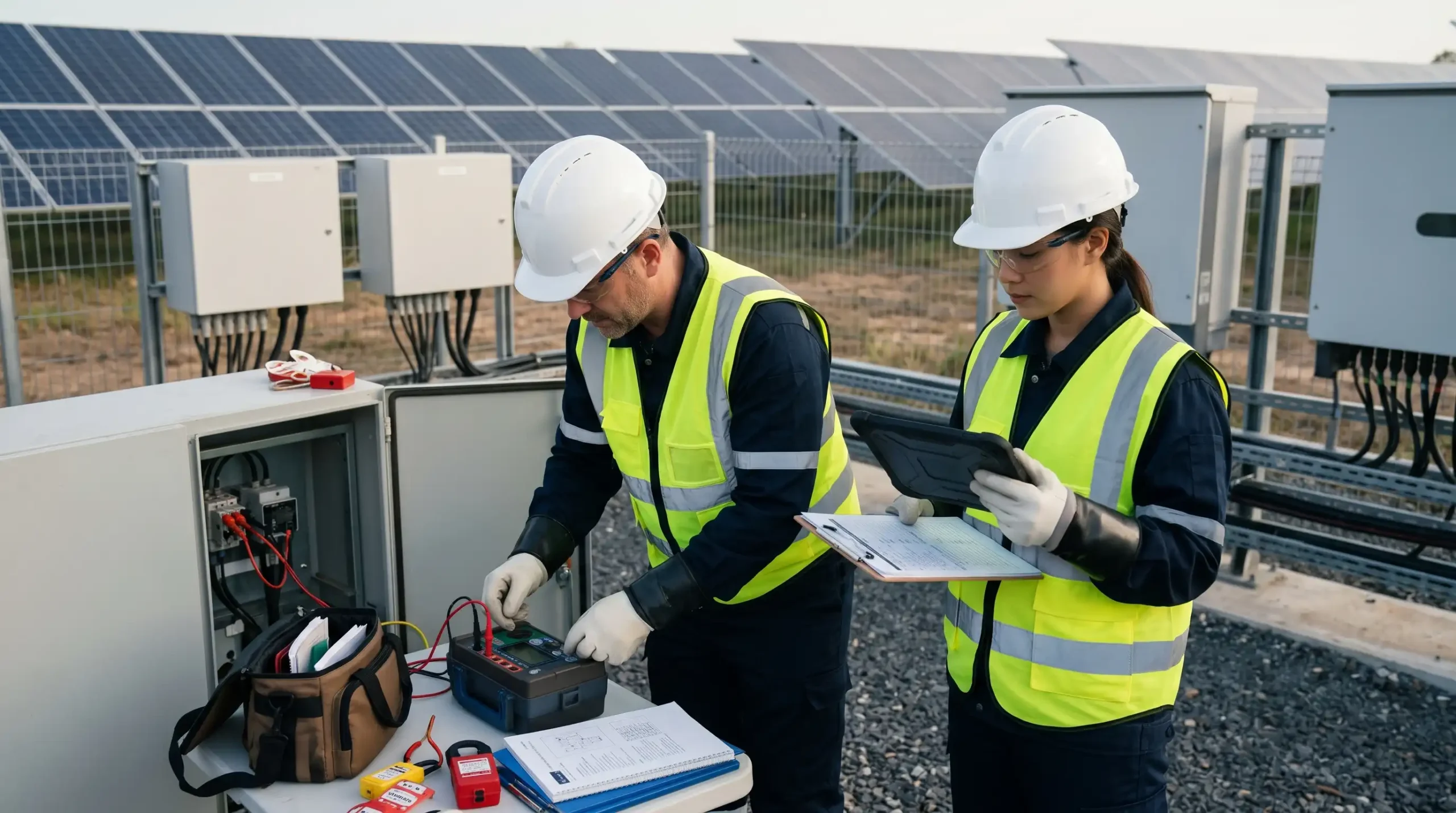
Where appropriate, and in accordance with equipment requirements, electrical measurements can be used to evaluate DC insulation condition.
The system configuration, connected electronic equipment and testing conditions must be considered when interpreting the results.
Insulation testing should therefore be performed by competent personnel using procedures suitable for the installed equipment.
Jaka Energy Testing and Commissioning services can support electrical testing and system assessment.
Some insulation problems may only appear during or after wet weather.
When alarms correlate with rain or high humidity, maintenance teams may focus on:
Recurring insulation alarms under specific weather conditions can provide an important diagnostic clue.
SCADA records can help determine which inverter is affected and when the insulation alarms occur.
Useful information may include:
Jaka Energy SCADA Automation solutions can support centralized monitoring and historical analysis of solar plant data.
If an inverter stops because of an insulation problem, the entire section connected to that inverter may lose production.
Even when the original problem affects only one string, failure to isolate the correct section can result in a larger production loss.
Repeatedly resetting alarms without identifying the cause is therefore not an effective maintenance strategy.
Not every insulation failure can be completely prevented, but regular inspection can identify many developing problems earlier.
Maintenance can include:
Comparing results from previous maintenance visits can also help identify deteriorating conditions.
Possible causes include cable damage, moisture, connector problems, module wiring issues and installation defects.
Yes. The inverter may prevent startup or stop operation when the DC insulation condition does not meet its safety criteria.
Not every insulation fault is visible thermally, but thermal imaging can help identify abnormal heating at damaged or poor electrical connections.
Moisture or water ingress can affect the insulation condition of damaged cables, connectors or junction boxes.
Early identification of DC insulation problems can help reduce inverter downtime and production losses in photovoltaic plants. For solar electrical maintenance, testing, cable inspection and fault diagnosis, contact Jaka Energy.